
Resource · Product judgment
A practical guide to stronger product judgment
Product judgment is the work of choosing what should change, for whom, and why. This guide gives anyone shaping the product a practical way to ground that choice in context without pretending the process can make the decision for them.
Start with the decision, not the output
Name the choice that needs to be made and the person or user it affects. A feature description is not yet a product decision.
Ground the choice in current context
Bring forward the governing goal, direct evidence, relevant prior decisions, constraints, and what changed since the last call.
- Separate evidence from inference
- Name uncertainty explicitly
- Use only context that could change the decision
See the practice in context
A product choice becomes easier to examine when the goal, evidence, tradeoffs, and missing context are visible together.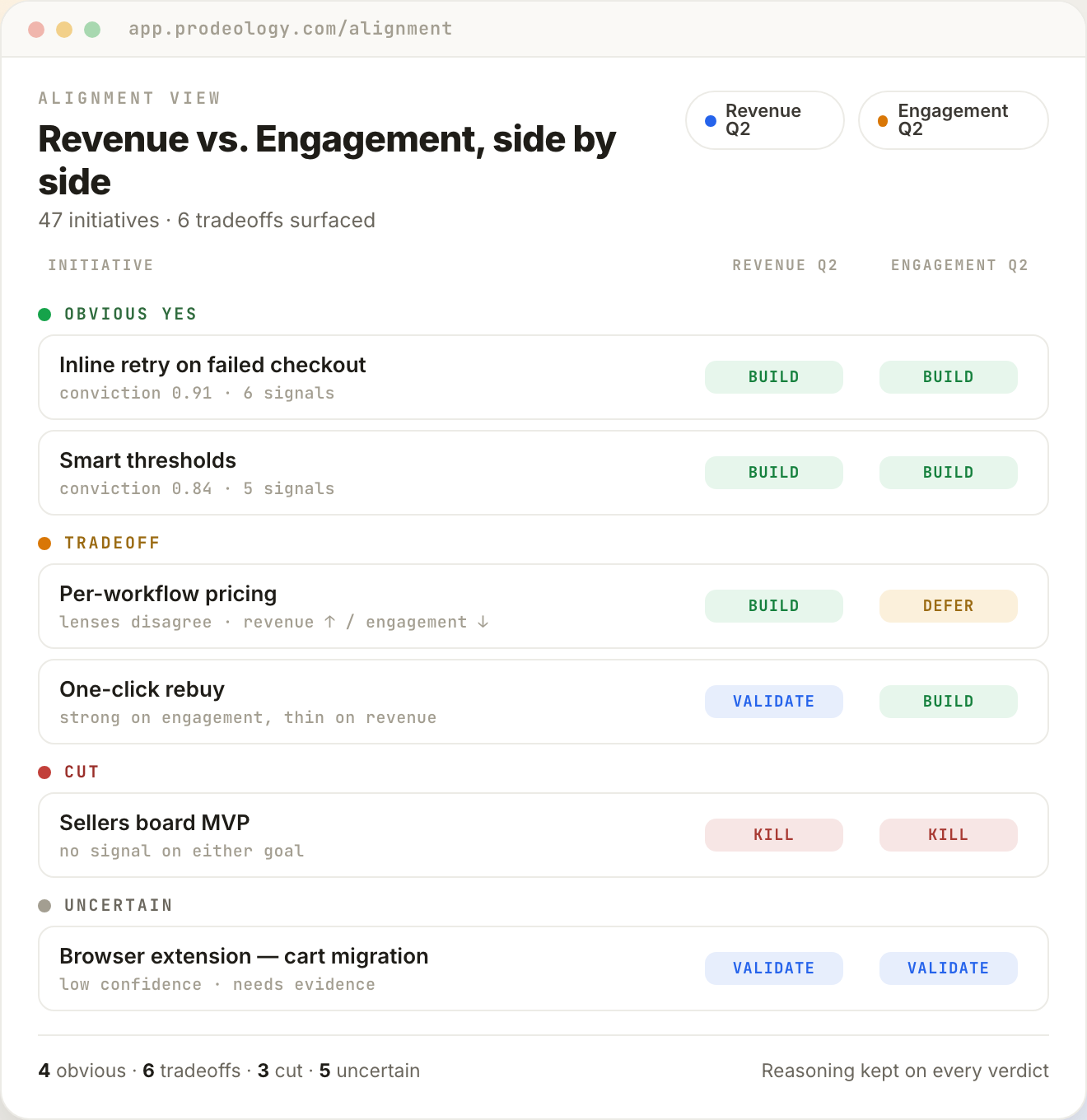
Surface what the current plan misses
Look for an unclear problem, unsupported assumption, unrepresented user state, dependency, policy boundary, or acceptance condition. Missing considerations become questions rather than invented facts.
Weigh tradeoffs and carry the decision forward
Compare the credible alternatives against the goal and constraints, record the rationale, and make the result available to the people reviewing quality or implementing the work.
A framework is not a substitute for expertise or accountability
Structured guidance can improve the inputs and make tradeoffs visible. The people responsible for product, engineering, quality, and business outcomes still make and own the consequential call.