
Resource · Continuous enrichment
A practical model for improving work without creating ticket bloat
Useful enrichment changes the quality of the decision. It finds a missing dependency or weak assumption; it does not pad every item with generic prose.
Enrich against a clear standard
Assess whether an item is sufficiently clear, supported, connected, and bounded for its current stage rather than forcing one universal template.
Protect provenance and authorship
Keep confirmed evidence, human decisions, and agent proposals distinguishable. Preserve strong existing content.
- Do not turn inference into fact
- Explain the reason for each material addition
- Allow accept, edit, and reject
See the practice in context
Each suggestion should explain the gap it addresses and remain optional until reviewed.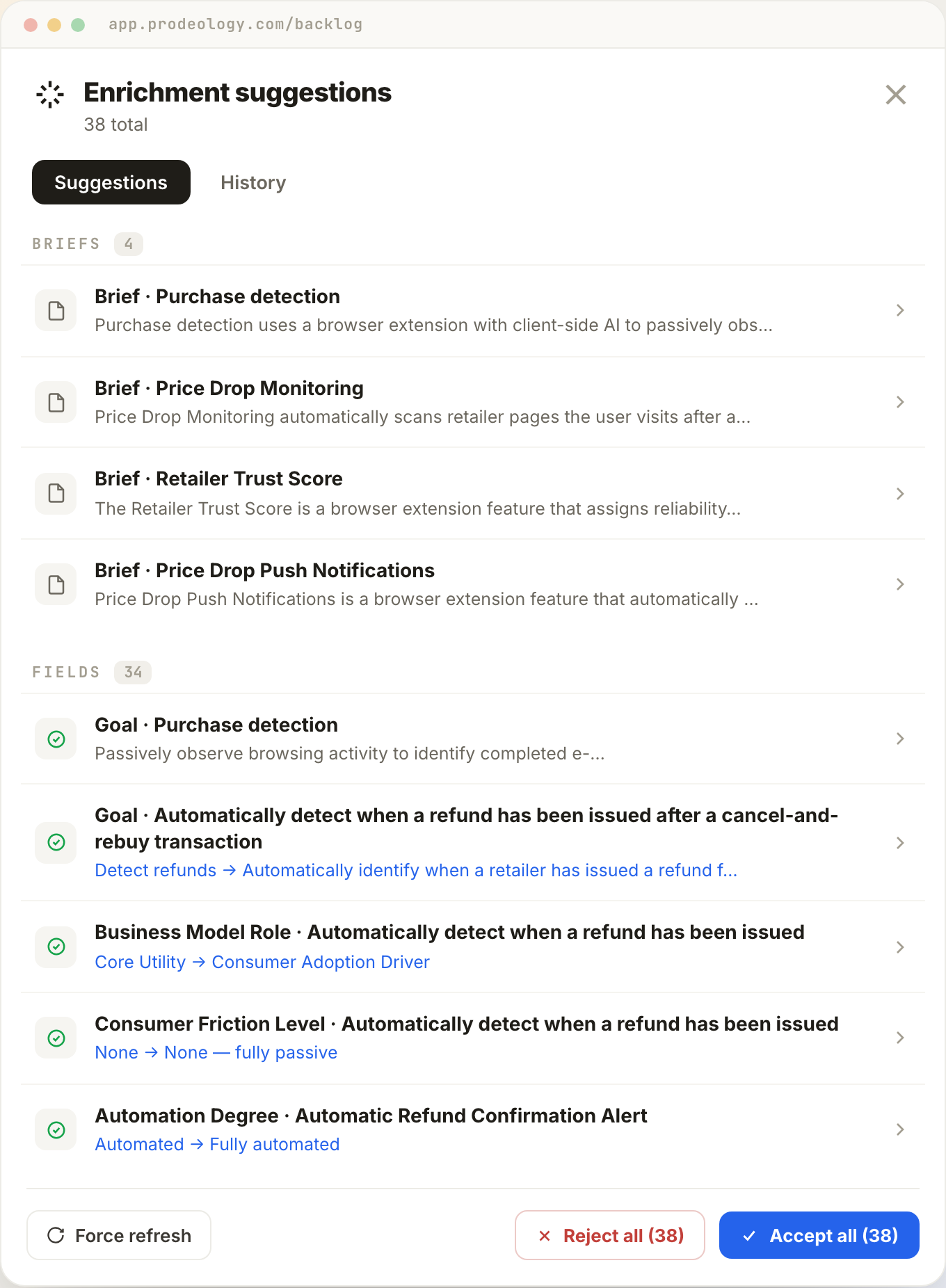
Revisit work when context changes
Continuous enrichment is most valuable when new product intelligence can improve existing plans, not only newly created items.
A useful enrichment test
Remove a suggestion and ask whether the decision becomes harder to make or the next actor is more likely to get it wrong. If nothing meaningful changes, the suggestion is decoration. If it exposes a missing dependency, unsupported belief, or unclear boundary, it has earned its place.
Completion is contextual
An item does not need every possible field. The right level of detail depends on risk, stage, and who must act next.