
Resource · Focus and Composer
From a committed goal to a credible plan
Focus establishes the outcome and decision frame. Composer evaluates how candidate work fits together to advance it. This guide shows why the separation matters.
Focus sets the planning contract
Define the outcome, success conditions, constraints, and non-goals before debating individual backlog items.
Composer tests plan coherence
Evaluate candidate work for contribution, dependencies, evidence, and omissions, then recommend the least plan that can credibly achieve the outcome.
- Do not equate backlog rank with value
- Keep rationale inspectable
- Reconcile when assumptions change
See the practice in context
The goal governs selection; the plan explains how the selected work contributes.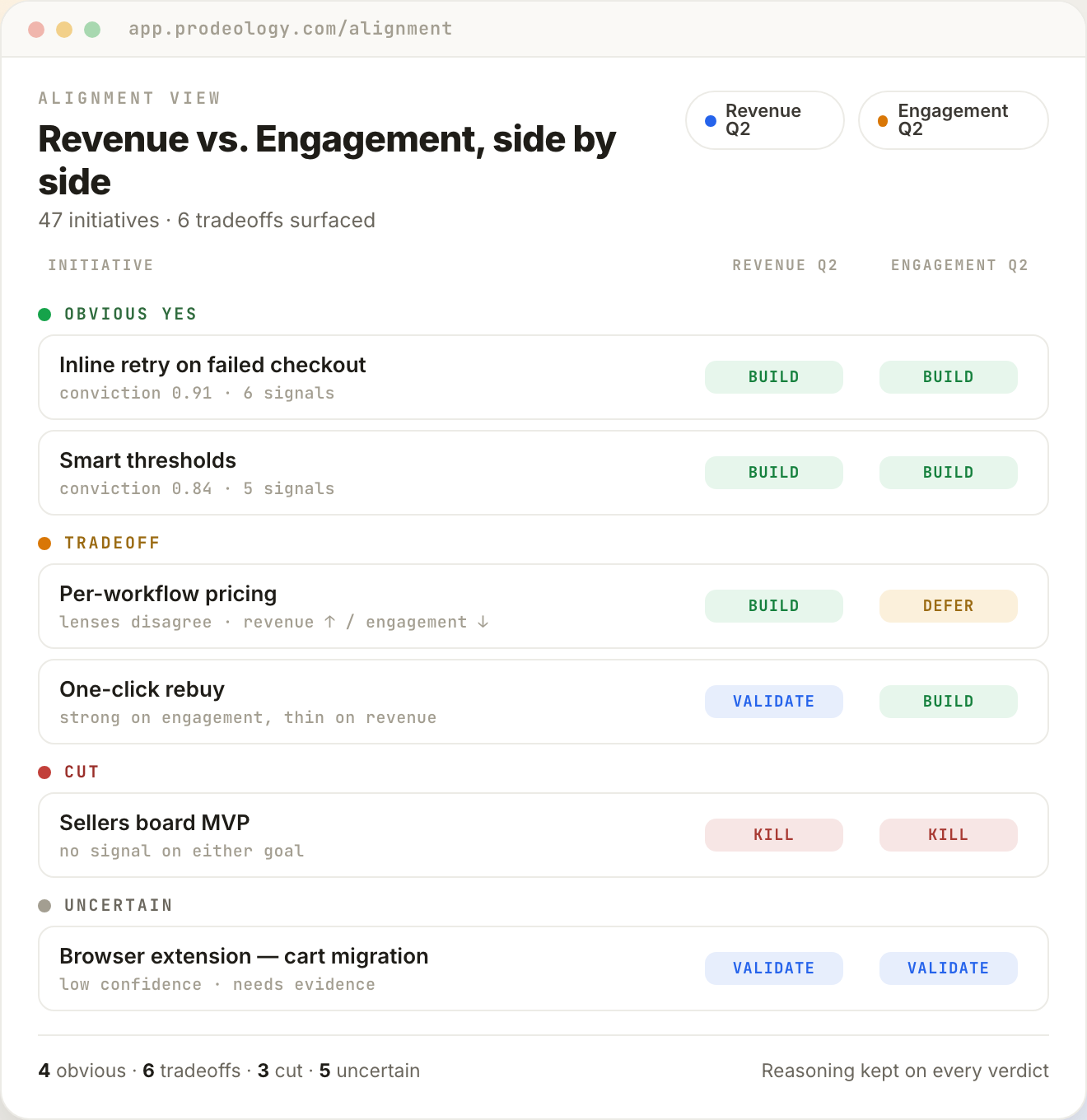
The two views prevent common planning failure
Separating goal definition from plan composition reduces solution anchoring and makes later plan changes easier to judge.
Questions for the planning review
Does every selected item make a specific contribution to the outcome? Which dependency could invalidate the sequence? What evidence supports the largest bet? Which omission would make the plan fail? These questions test the plan as a system instead of debating items in isolation.
The model supports, rather than automates, commitment
People choose the goal, approve the plan, and own capacity trade-offs. Recommendations remain open to challenge.