
Resource · Human authority
A practical authority model for product agents
Authority should follow consequence. Agents can handle bounded preparation and analysis; people approve commitments, material changes, and sensitive external actions.
Separate preparation from commitment
Research, synthesis, gap detection, and draft recommendations can often proceed within defined boundaries. A commitment changes what the organization will do.
Place gates at consequential transitions
Require explicit review for strategy changes, scope commitments, policy-sensitive actions, destructive operations, or writes to external systems where mistakes matter.
- Show the evidence and rationale
- State uncertainty and alternatives
- Record who decided and what changed
See the practice in context
The gate names the pending decision and keeps approval attributable.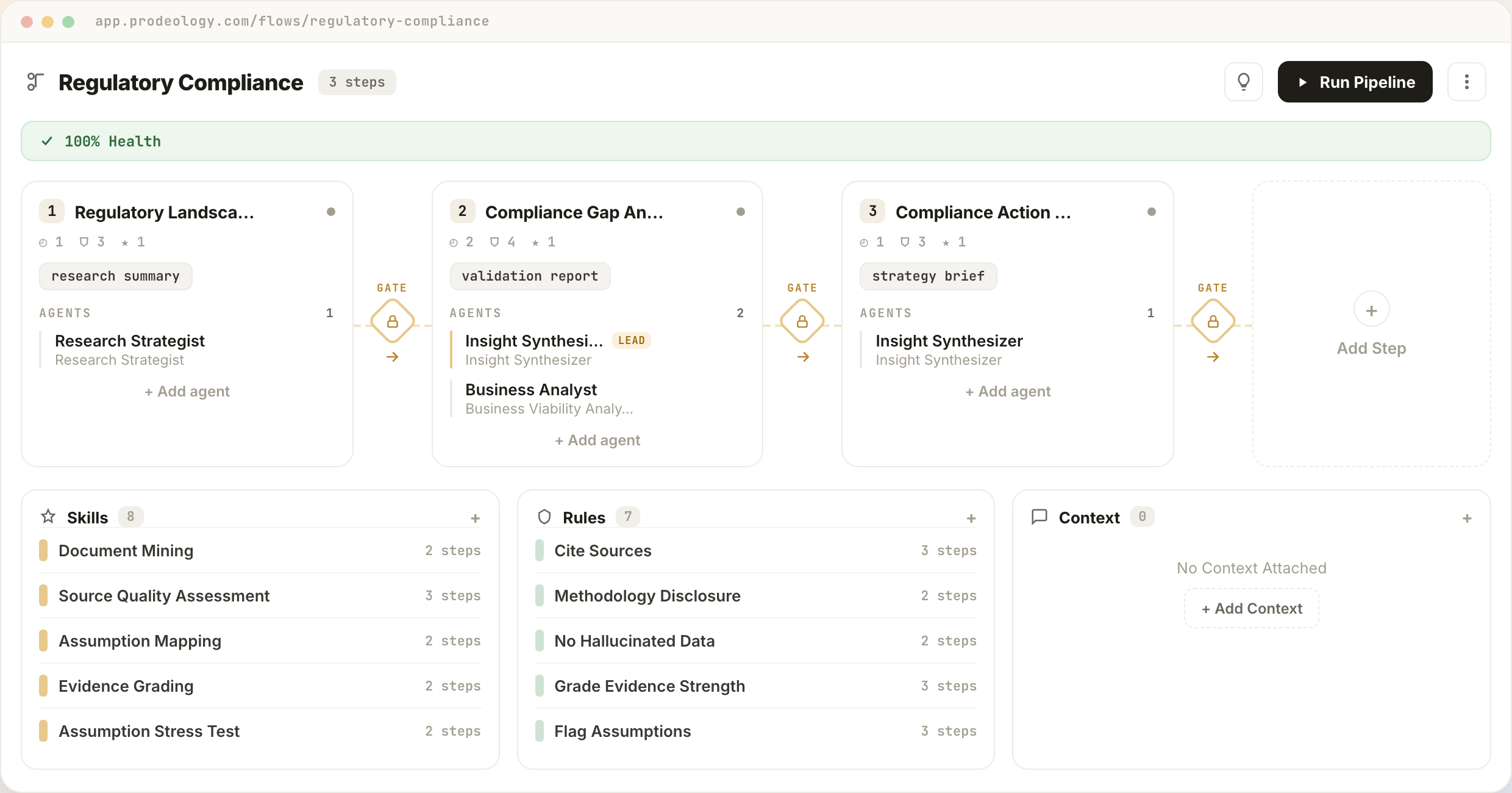
Avoid approval fatigue
Do not gate low-risk mechanical work merely to appear controlled. Make each approval correspond to a decision a person genuinely owns.
Write the authority rule before the workflow
State what the agent may do alone, what it may only propose, who can approve the proposal, and what evidence that reviewer needs. Also define timeout and failure behavior so silence never becomes accidental approval.
A click is not informed consent by itself
Reviewers need enough context, time, and a clear alternative to approval. Workflow design remains an organizational responsibility.