
Resource · Lifecycle vision
A product cycle that leaves better context behind
The lifecycle vision is cumulative: each planning and delivery cycle should improve the context available to the next one. This guide separates the operating principle from capabilities still being built.
Preserve the original intent
Keep the goal, assumptions, evidence, and decision rationale attached as work moves from planning toward implementation.
Compare outcomes with expectations
Delivery and product signals become useful when they can be interpreted against what the team intended and believed.
- Observe what changed
- Identify which assumption was affected
- Update relevant context and work
See the practice in context
Intent and outcomes must stay connected for later learning to be meaningful.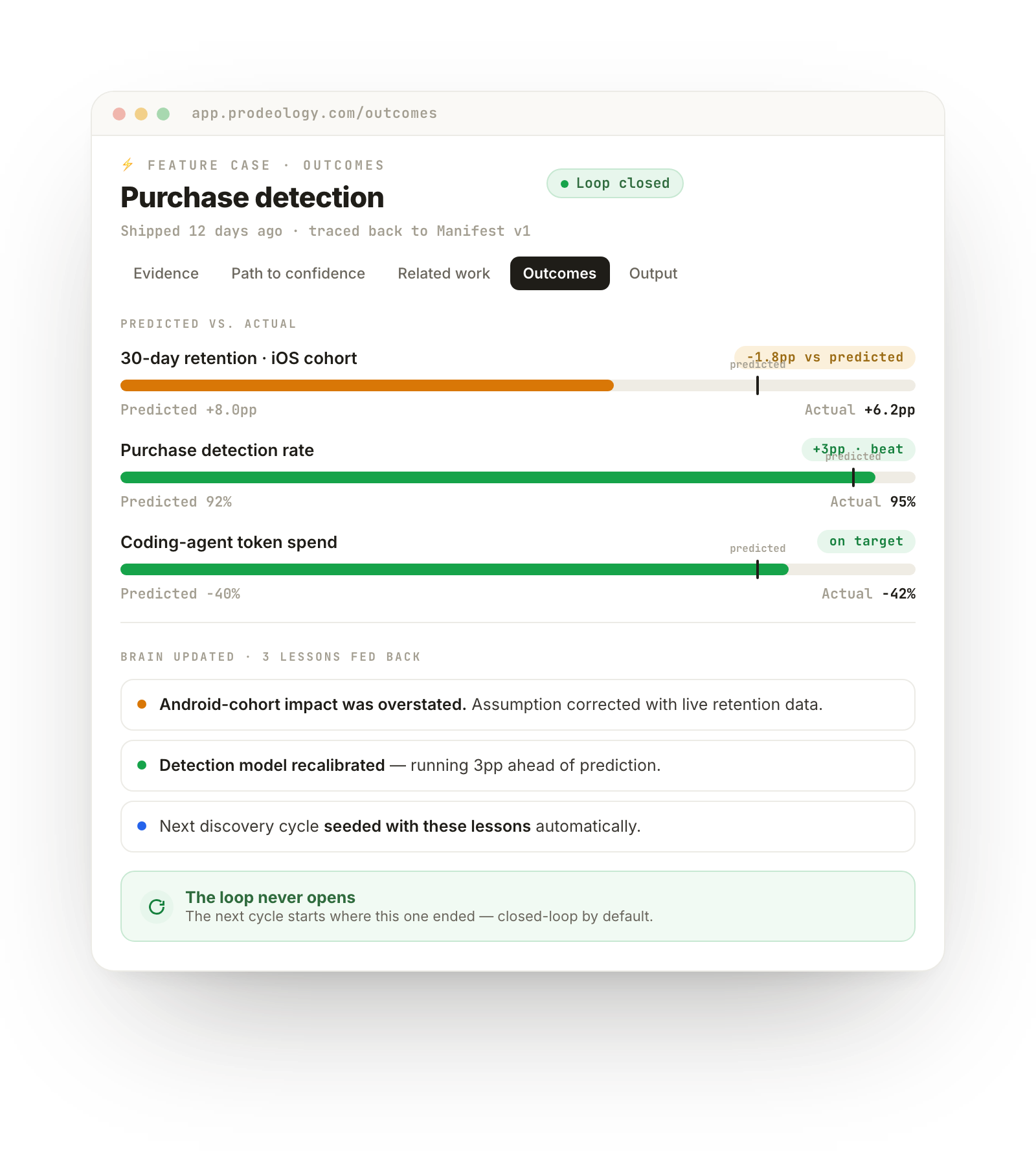
Improve the next decision
Learning earns its place when it changes a future plan, closes an uncertainty, or sharpens the product model.
Close the loop with a specific correction
A useful review names the expectation, the observed result, and the belief or plan that should change. Recording that conversion matters more than collecting another retrospective. The corrected context should be available when the affected work is next considered.
Vision is not present-tense proof
Automatic closed-loop observation across every tool and analytics source is a direction, not a claim of universal current coverage.